
Introduction
In today’s competitive digital landscape, simply having a website isn’t enough. If your business isn’t visible on Google Search, you’re invisible to potential customers.
That’s where Search Engine Optimization (SEO) comes in.
But here’s the real question: Should you focus on Local SEO or Traditional SEO?
Both strategies can grow your business, but they work in very different ways.
In this complete guide, you’ll learn:
- The difference between Local SEO and Traditional SEO
- When to use each strategy
- How to combine both for maximum results
- How a Local SEO tool can accelerate your rankings
Quick Answer
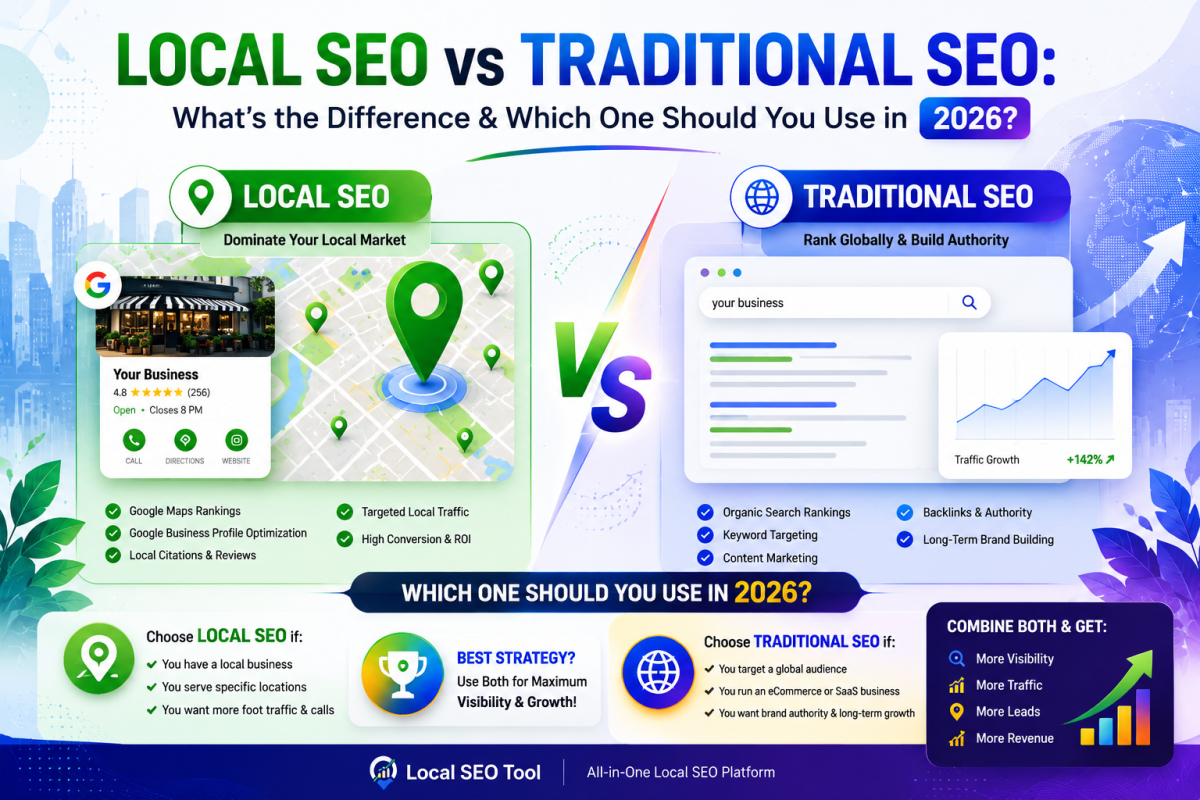
Local SEO focuses on ranking your business in a specific location (e.g., “SEO services in Mumbai”).
Traditional SEO targets a broader audience without location-based intent (e.g., “SEO services”).
Best approach: Use Traditional SEO for traffic and Local SEO for conversions.
What is Traditional SEO?
Traditional SEO (also known as organic SEO) focuses on improving your website’s visibility on a national or global scale.
It targets broad keywords without geographic intent.
Examples:
- SEO services
- Digital marketing tips
- Best SEO tools
Key Features:
- Targets a wide audience
- Focuses on high-volume keywords
- Requires strong backlinks
- Highly competitive
Best For:
- Blogs and content websites
- SaaS platforms
- E-commerce businesses
- Online services
What is Local SEO?
Local SEO focuses on optimizing your online presence for location-based searches.
It helps your business appear in:
- Google Maps
- Local Pack results
- “Near me” searches
Examples:
- SEO services in Mumbai
- Digital marketing agency in Delhi
- Local SEO expert near me
Key Features:
- Geo-targeted keywords
- Google Business Profile optimization
- Reviews and ratings
- Higher conversion rates
Best For:
- Local businesses
- Agencies
- Freelancers
- Service providers
Local SEO vs Traditional SEO: Key Differences
1. Target Audience
- Traditional SEO: National or global audience
- Local SEO: Specific city or region
2. Keyword Strategy
- Traditional SEO: Broad keywords
- Local SEO: Location-based keywords
3. Competition Level
- Traditional SEO: Very high
- Local SEO: Moderate
4. Ranking Factors
Traditional SEO:
- High-quality backlinks
- Content depth and relevance
- Domain authority
Local SEO:
- Google Business Profile optimization
- Customer reviews
- NAP consistency (Name, Address, Phone)
- Local backlinks
5. Search Results
- Traditional SEO: Organic listings
- Local SEO: Google Maps + Local Pack
6. Conversion Rate
- Traditional SEO: Lower (research-based users)
- Local SEO: Higher (action-ready users)
When Should You Use Local SEO?
Use Local SEO if:
You Serve a Specific Area
If your business operates in cities like Mumbai, Delhi, or Bangalore.
You Want Faster Rankings
Local SEO often delivers quicker results due to lower competition.
You Need More Leads
Local searches usually come from users ready to buy or contact.
You Offer Services
Service-based businesses benefit the most from local visibility.
When Should You Use Traditional SEO?
Use Traditional SEO if:
- You target a global audience
- You run a blog or content platform
- You sell digital products
- You want long-term organic traffic
Best Strategy: Combine Both
The most successful businesses don’t choose one, they combine both.
Traditional SEO → Traffic Engine
Brings consistent visitors from broad searches
Local SEO → Conversion Engine
Turns local users into paying customers
Together, they create a powerful growth system.
Benefits of Using a Local SEO Tool
A Local SEO tool acts like a control panel for your rankings.
1. Track Local Keyword Rankings
Monitor how you rank in specific locations.
2. Identify SEO Issues
Find errors that affect your visibility.
3. Optimize Google Business Profile
Improve your chances of appearing in local results.
4. Analyze Competitors
Understand what top-ranking businesses are doing.
5. Save Time with Automation
Get insights instantly without manual effort.
Local SEO Tool vs Other SEO Tools
Feature
Local SEO Tool
Other SEO Tools
Local Rank Tracking
Yes
Limited
Google Business Optimization
Yes
No
Ease of Use
Beginner-friendly
Complex
Cost
Affordable
Expensive
Why Local SEO is Critical in 2026
- Competition is growing rapidly
- Google prioritizes local search results
- “Near me” searches are increasing
- Automation is replacing manual SEO work
Businesses using Local SEO tools gain a major advantage.
Advanced Strategy to Rank #1
If you want to rank for competitive keywords like “Local SEO Tool,” follow this:
1. Create Supporting Content
Publish 5 - 10 related blog posts.
2. Build Internal Links
Connect all posts to your main page.
3. Earn Quality Backlinks
Get links from SEO blogs and directories.
4. Improve CTR
Use compelling titles and meta descriptions.
5. Update Content Regularly
Refresh your blog every 30 - 45 days.
Improve Your SEO Strategy Today
Stop guessing and start optimizing.
A powerful Local SEO tool can help you:
- Track rankings instantly
- Identify SEO issues
- Improve local visibility
Start optimizing today and take control of your rankings.
Frequently Asked Questions (FAQ)
What is the difference between Local SEO and Traditional SEO?
Local SEO targets specific locations, while Traditional SEO targets a broader audience.
Which is better: Local SEO or Traditional SEO?
It depends on your goals. Local SEO is best for local businesses, while Traditional SEO is ideal for global reach.
Can I use both strategies?
Yes, combining both provides the best results.
What is a Local SEO Tool?
A Local SEO tool helps track and improve local search rankings.
How long does Local SEO take?
Typically 2 - 8 weeks, depending on competition and optimization.
Final Conclusion
Local SEO and Traditional SEO are not rivals, they’re teammates playing different positions.
- Local SEO brings high-intent customers
- Traditional SEO builds long-term traffic and authority
The real growth happens when you combine both strategically.
If you want to move from page 2 to page 1, consistency, smart optimization, and the right tools make all the difference.
Local SEO Tools
Local SEO software to improve rankings, manage listings, and grow local visibility.
Phone